I like to think of life as a long railway journey, though I find that I remember very little of the scenery without remembering who was there to see it with me. A town through which I passed with a friend is quite another town from the one I might have passed alone. There are whole stretches of my life that I recall chiefly as conversations. I could not tell you what we were passing. I remember what we were laughing about.
At first, of course, we think everyone is going all the way. We are young; we have hardly learned the names of the stations. The friend beside us has always been there, or has been there for so much of our little experience that it amounts to the same thing. We lean across each other to look out of the window. We argue over what we see. It does not occur to us to ask where anyone is getting off.
Then someone does. Perhaps they leave so early that we carry only a few clear things about them into the rest of our lives: a way of laughing, an afternoon, something they said which we still occasionally say ourselves. For a while we go on turning toward their seat. Something has happened which belongs, by old agreement, to the two of us, and it takes a moment to remember that we must now enjoy it alone.
I confess that I am seldom reasonable about these departures. If the company was good, why should it end? I have more to say; I had supposed that they did too. It is difficult, in the first disappointment, to remember that the person beside me has a whole journey to make, of which our companionship is only a part. They may be sorry to leave and still have somewhere else to go.
But I should be sorrier if we had never met. Even knowing the station at which they would leave me, I think I would ask them to sit down again at the beginning. I would want the same foolish conversation, the same disagreement, the same afternoon that passed so pleasantly we scarcely noticed it. The prospect of missing a person seems a poor reason to have missed knowing them. I have enjoyed too much company to wish that I had been spared its loss.
The carriage changes. Someone gets on much later, when we have begun to think that we know the sort of people we shall like. They turn out to be quite another sort. They have a way of looking at things that makes us look too. A stretch of country which we had dismissed as dull becomes full of interest. We find ourselves talking with an eagerness we had almost forgotten, and are mildly embarrassed to discover how much we have been saving up to say.
I am fond of these late arrivals. They cannot remember us at our most ridiculous, and we are free to decide how much of that history to supply. Yet soon we want to tell them everything. We describe the people who sat where they are sitting now. We point back toward places they never saw. It is a curious pleasure, to become so attached to someone that we begin wishing them into our past.
There are others who stay beside us through almost the whole journey. At first we talk without stopping; later we can sit quietly together. One reads while the other looks out. Then a remark, hardly worth making to anyone else, starts us both laughing. Years have passed, and there is still something to tell. I think the great kindness of such friends is their willingness to keep finding us interesting, even after they have learned so many reasons not to be impressed.
And sometimes the door opens at a later station, and a person we thought we had lost comes back into the carriage. We are shy for a moment. We have each been living in the other’s memory, where people are apt to remain younger and less complicated than they really are. There is pleasure in recognizing the familiar voice, and another pleasure in hearing what it now has to say. We settle down to the business of finding each other again.
Some seats remain empty longer than we would like. There are friends I should still be glad to see coming down the aisle, although I no longer expect them. I cannot pretend that everyone who leaves is easily wished well, or that I have always been a considerate companion myself. I have been absorbed in the view when someone wanted to speak. I have mistaken a person’s quietness for a wish to be left alone. There are things I would do differently if we travelled that part again.
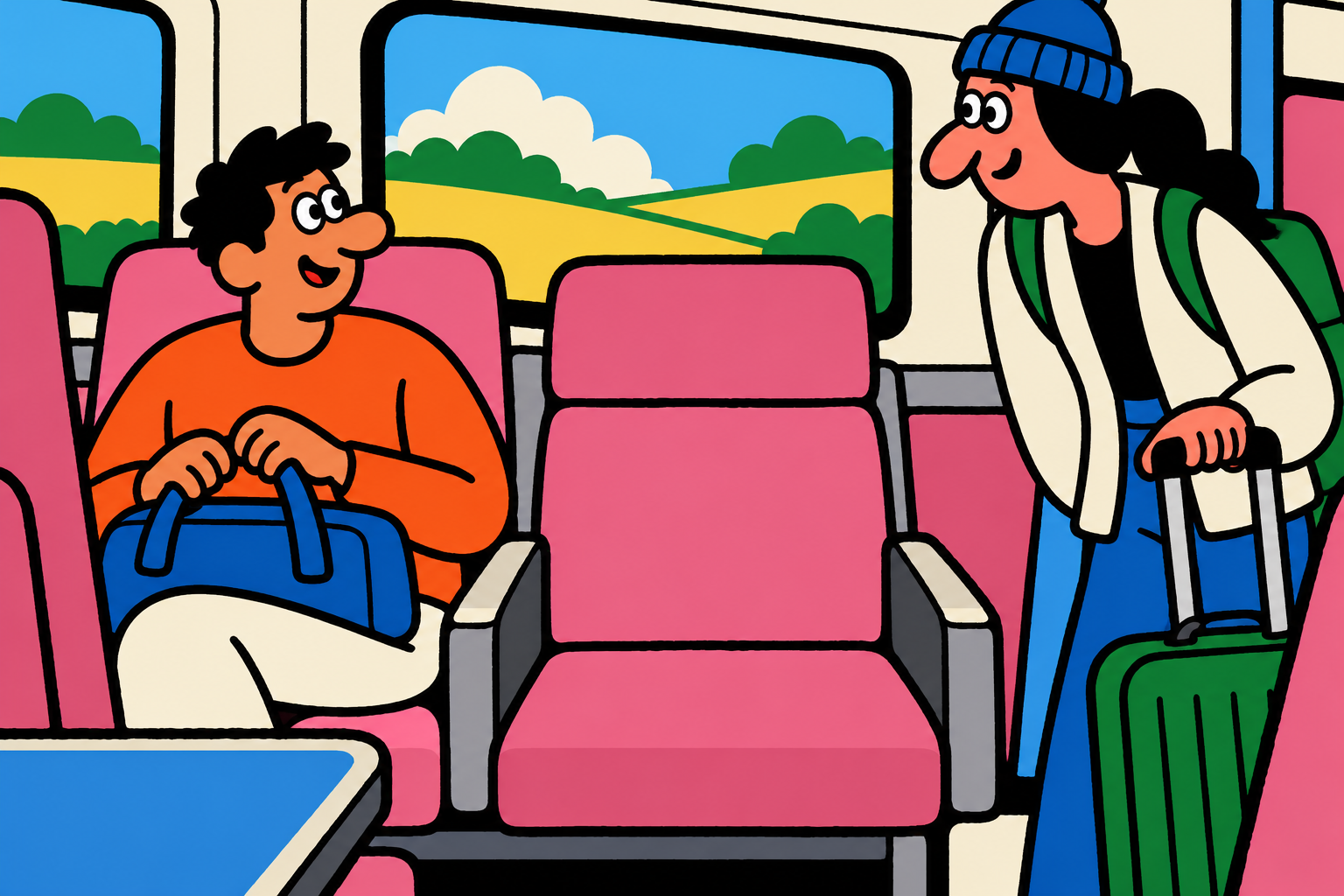
But the door is open now, and someone is asking whether the seat is taken. I move my things. We begin with some small observation about the journey, the sort of remark one makes merely to be friendly. Their answer interests me, and I ask another question. We have been talking for some time when I notice that the train has left the station.