There is a particular kind of Halloween costume that requires you to take someone’s phone, watch a video, watch it again because you missed the relevant part, and then look back at the person standing in front of you with a new respect for what they have done with cardboard.
I find this moving. I also understand wanting to leave the party.
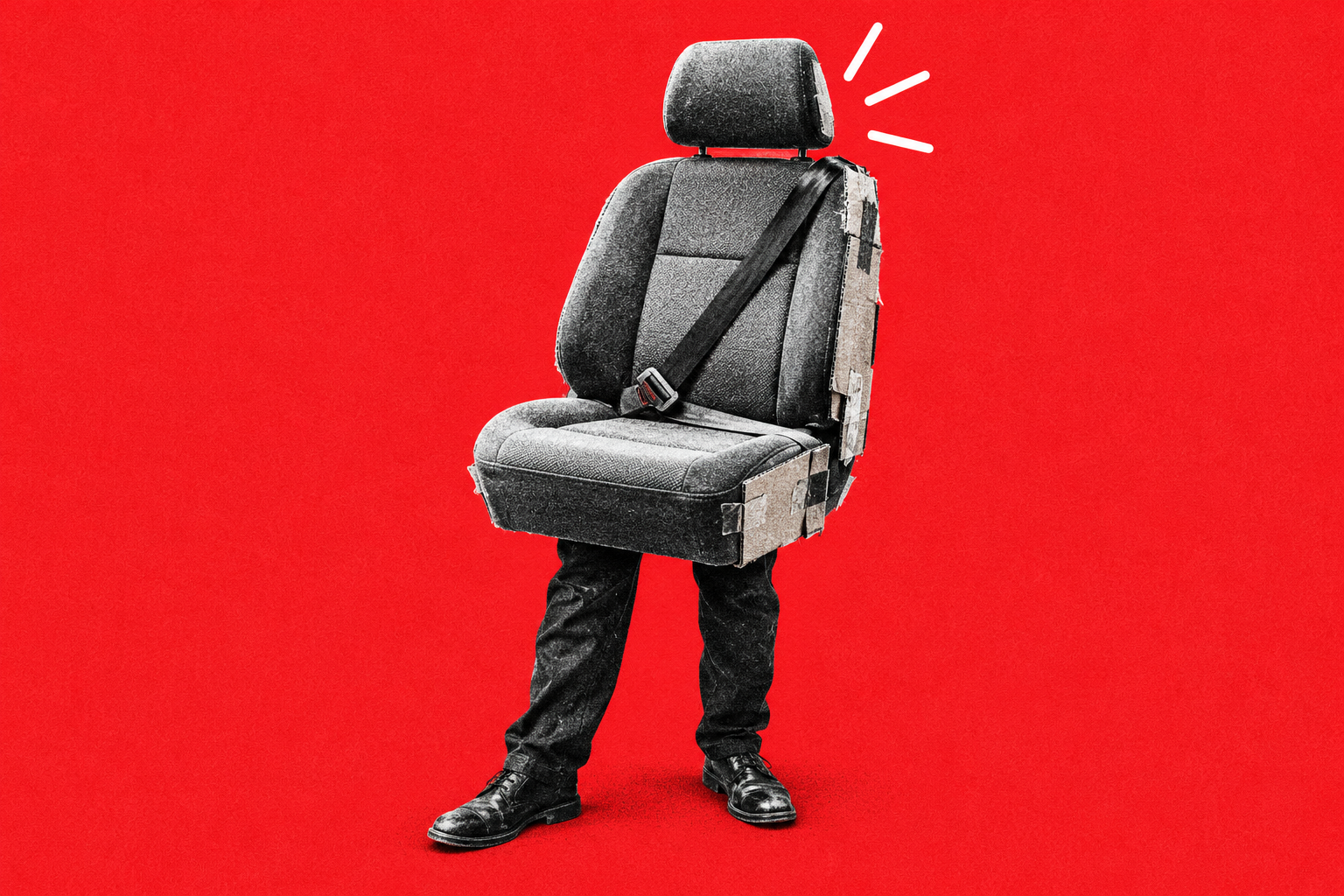
Gay Halloween has become an annual celebration of the unnecessarily specific. In 2024, documented costumes included the lockers from Bottoms, the tennis ball from Challengers, and a couple dressed as Chappell Roan and the passenger seat from “Casual.” Someone had taken a supporting role in a sexual encounter and made it wearable.
The accompanying complaint, “I hate gay Halloween,” is generally an expression of admiration. What do you mean you’re that? How did you remember that? Why, having remembered it, did you purchase supplies?
Somewhere in those questions is a fairly good account of how culture works now.
Consider the “Feed the Birds” girl. Her name is Coco Marshall, a useful thing to establish before the internet reduces another person to the activity through which we encountered her. At thirteen, she went viral after her father shared her performance of the Mary Poppins song in a community-theatre production. Her vocal runs prompted comparisons to Mariah Carey and a debate about what, exactly, one is permitted to do to a musical-theatre standard. She and her father subsequently discussed the attention, both supportive and critical, on the podcast Theater Girl.
“Yassified Mary Poppins” is an efficient description of the appeal. A familiar piece of childhood culture has acquired the vocal ambitions of a woman closing an awards show. The birds will be fed when she has finished.
There is something delightful about this degree of commitment. Much of online life involves demonstrating that you understand how embarrassing it would be to care. Here is a young performer caring quite a lot, adding the runs, taking the opportunity. You can have reservations about an interpretation and still enjoy the existence of a person who did not arrive at the microphone hoping to be unobtrusive.
The leap from that performance to a Halloween costume is easy to imagine. Arrive as Mary Poppins and people recognize the character. Arrive as the “Feed the Birds” girl and you are asking a more intimate question: did this happen to you, too?
Did your phone show you this? Did you send it to someone? Has this apparently inconsequential thing been taking up space in your head?
That is what I like about these costumes. They give the useless things we remember somewhere to go.
You might forget an appointment and retain, for years, the exact delivery of a minor character in Hannah Montana. Usually, this is information for which adult life offers no obvious application. Then October arrives, and you can spend an evening being that character while a stranger across the room becomes briefly hysterical with recognition. Your memory has finally found its audience.
There is vanity in this, certainly. Obscurity can become its own tedious form of sophistication. A room in which everyone is determined to have the least recognizable costume can feel like a dinner party where every guest keeps mentioning a novelist nobody else has read. At a certain point, you are standing beside the drinks explaining a screenshot to a person who wanted to know where you bought your shoes.
And the internet has made being funny feel suspiciously like an assignment. A costume can now be designed for the photograph that will circulate afterward, with the actual party serving as an inconvenient location shoot. Even our leisure acquires an imagined audience and a little performance review.
Still, I hesitate to dismiss all of this as being chronically online. The phrase has become a convenient way to avoid distinguishing between someone who has lost perspective and someone who has developed an unusual enthusiasm. Remembering an absurd television moment does not, by itself, constitute a failure to live.
Sometimes the costume is what gets the memory out of the phone and into a room.
There is work involved. Someone has to find the fabric, borrow the wig, persuade a friend to participate. The reference becomes an excuse to make something together. After hours of watching other people perform, you have an evening in which you are allowed to be ridiculous yourself.
The affectionate part matters, especially when the reference is a real person. Coco is a young performer, not a character the internet has written and therefore owns. Enjoying her confidence should leave room for her to become someone other than the girl in that one clip. She is already moving beyond it: her New York cabaret debut, Coco Marshall: A Star Is Born, is scheduled for October 19.
A good joke can be a form of attention. It can also become a demand that somebody remain amusing in exactly the same way forever. The difference deserves more thought than the word “iconic” usually allows.
Perhaps that is the most interesting thing about gay Halloween: the affection is often disguised as an insult. “I hate this,” we say, delighted. “You’re so stupid,” we tell a friend who has spent three evenings making something ingenious. We announce that we cannot stand these people while actively looking for them across the room.
I would like us to retain the affection, even when the reference needs explaining. Especially then. Nobody should have to pass an examination to enjoy a party.
But there is a small, particular happiness in being understood before you have finished the explanation. Someone sees you, stops, and starts laughing. For once, the strange little thing you carried around in your head has brought you directly to another person.
You spent all week making a passenger seat.
Someone saved you a place.